S&W Model 66 vs 686 Plus: K-Frame vs L-Frame
Smith & Wesson's two great stainless .357s answer the same question two different ways. The Model 66 is the classic police revolver reborn — lighter, quicker in the hand. The 686 Plus is the gun S&W built when full-power .357 started beating the K-frame up. Fifty years later, the tradeoff hasn't changed.
Updated July 2026 · The 686 Plus also appears in our GP100 comparison and revolver coverage.
The 686 Plus is the better buy for most people — a seventh round, more steel where it counts, softer shooting with full-house magnums, and a frame designed from birth to digest them by the case.
But buy the Model 66 if the gun is going on your belt or in the field. The K-frame carries meaningfully lighter, balances quicker, and if your diet is mostly .38 Special with occasional magnums — which is how most people actually shoot .357s — the 66 gives up nothing you'll miss.
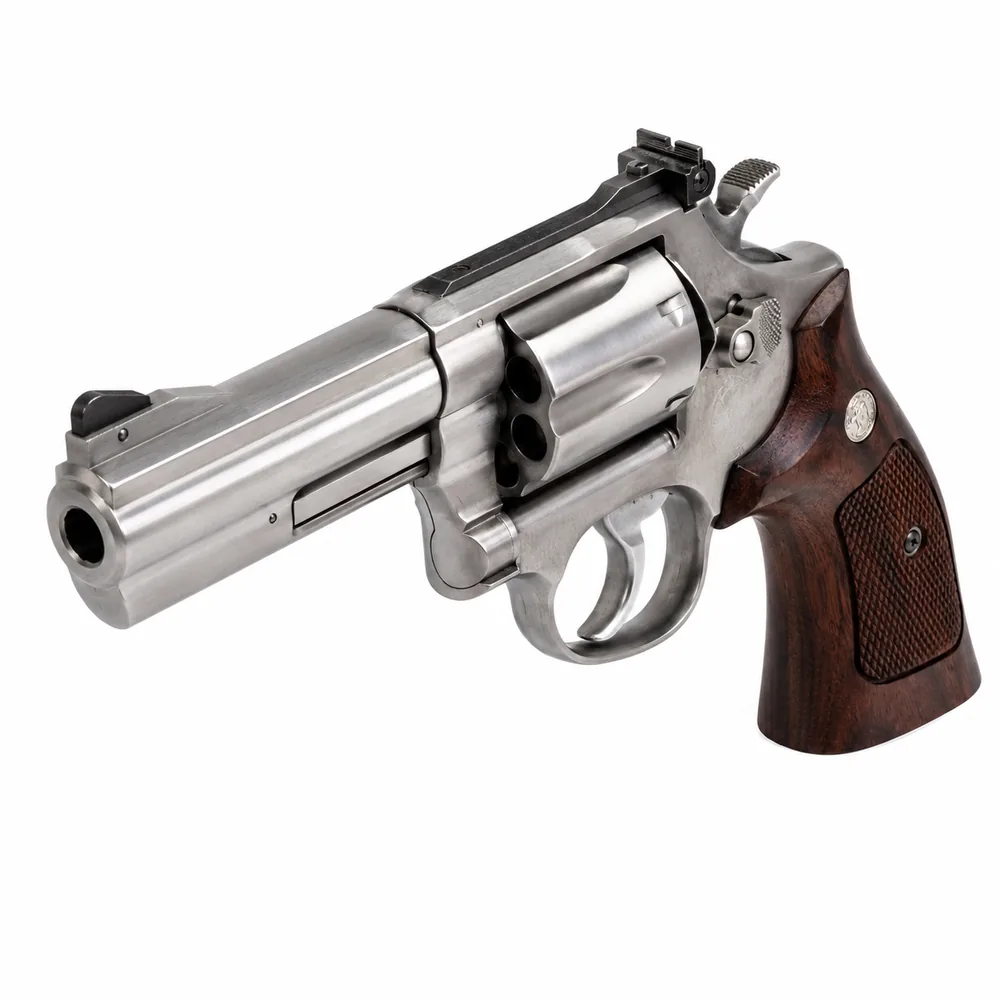
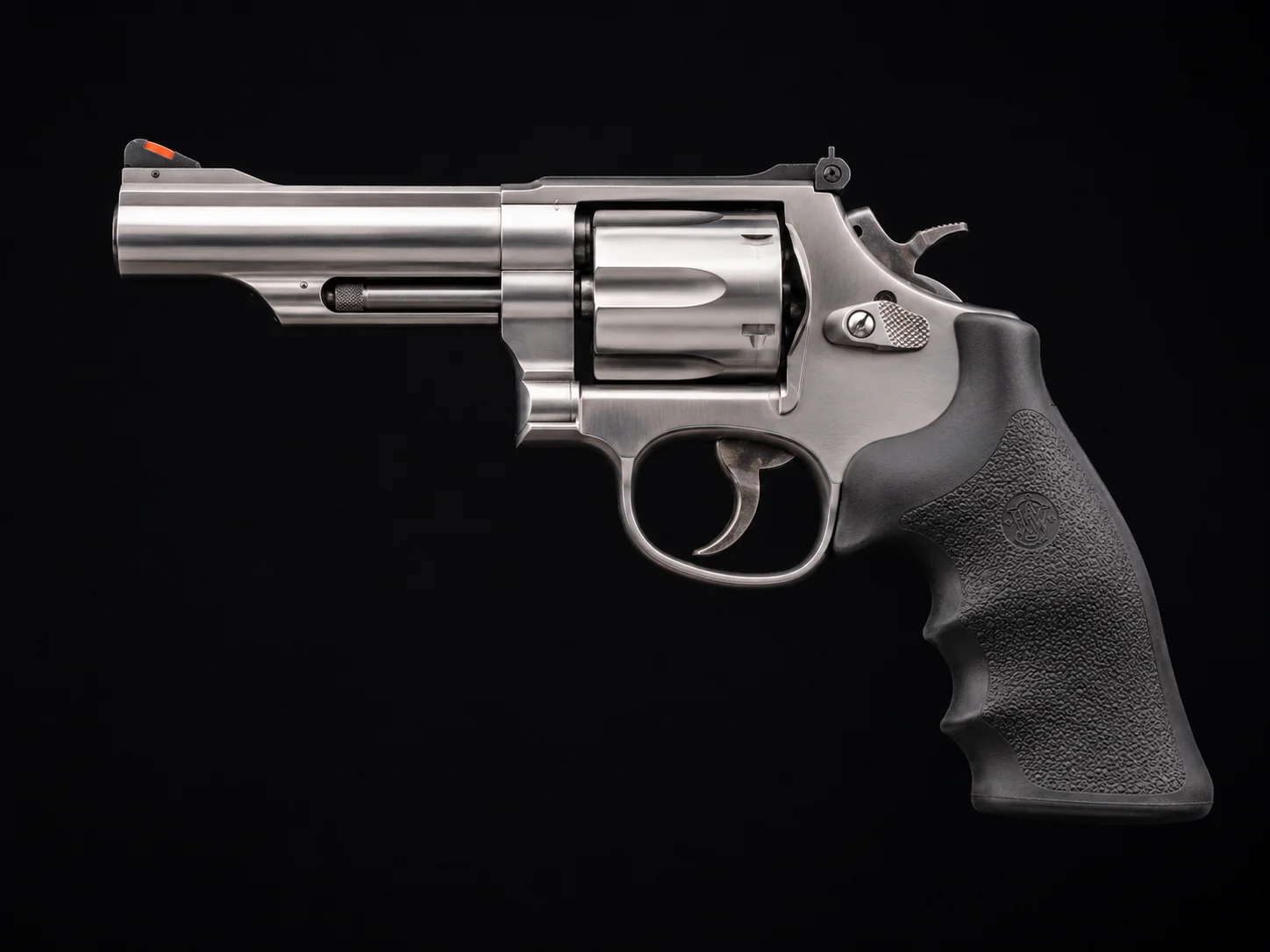
Side-by-Side Specs
| Spec | Model 66 (4.25") | 686 Plus (4") |
|---|---|---|
| Caliber | .357 Magnum / .38 Special +P | .357 Magnum / .38 Special +P |
| Capacity | 6 rounds | 7 rounds |
| Frame | K-frame, stainless | L-frame, stainless |
| Barrel | 4.25" | ≈4.1" |
| Weight | ≈33.5 oz | ≈38–39 oz |
| Sights | Red-ramp front, adjustable rear | Red-ramp front, adjustable rear |
| Action | DA/SA | DA/SA |
| Also available | 2.75" carry version | 2.5", 3", 6" versions |
| Street price | ~$830–900 | ~$870–950 |
Prices for both have crept up with all S&W revolvers; used examples of each are plentiful and hold value well.
The Frame Question, Explained
This whole comparison is really about five ounces of steel and where S&W put it. The K-frame was the twentieth century's police revolver — sized around .38 Special, later chambered for .357 Magnum, and beloved because it carried and pointed like a smaller gun. Its historical weakness was equally famous: a steady diet of full-power .357, especially hot 125-grain loads, stressed K-frame forcing cones over time. The L-frame 686 was S&W's 1980 answer — same grip feel, beefier cylinder window, full-underlug barrel, built to shoot magnums all day forever. Today's Model 66 (the 66-8 generation) isn't the old gun: its two-piece barrel design and modern metallurgy directly address the forcing-cone concern, and S&W rates it for unrestricted .357 use. We report that accurately — and also note that the L-frame remains the gun armorers point to when someone says "I handload full-house magnums and shoot a thousand of them a year."
Carry & Handling
Five-plus ounces and a slimmer cylinder make the Model 66 the gun you forget on your hip and the 686 the gun you're aware of by afternoon. In the hand the K-frame balances toward quickness — it points fast and swings light, which is why field carry and trail use keep the 66 alive. The 686's full underlug shifts weight forward into a deliberate, muzzle-heavy steadiness that target shooters love and hikers tolerate. Both wear the same grip frames, so aftermarket stocks fit your hand identically. For a nightstand gun the weight difference is irrelevant; for anything worn, it's the headline.
Shooting Full-Power .357
The 686 Plus takes this without argument. The extra mass and underlug turn full-house magnum recoil from sharp to merely stout, follow-up shots come back on target faster, and long magnum sessions stay fun instead of becoming endurance events. The Model 66 with magnums is entirely controllable but distinctly livelier — most 66 owners settle into the classic pattern of practicing with .38s and loading magnums for serious purposes, which is a sensible regime, not a failure. With .38 Special, both guns are pussycats and superbly accurate; S&W's adjustable-sight DA/SA formula is identical on each, and trigger quality between them is a wash from the factory.
The Seventh Round & Practical Value
The "Plus" in 686 Plus is a seventh charge hole — a 17% capacity increase in a defensive tool where every round is precious, achieved with no penalty beyond the L-frame bulk you were already buying. It also means seven-shot moon-clip conversions and speedloaders are available for those who go deep. The Model 66's counterargument isn't capacity; it's that the whole gun exists at a weight and profile the 686 can't reach, and its 2.75" variant is one of the most carryable full-caliber .357s S&W makes. Priced within $50–$75 of each other, neither gun wins on money — you're choosing a philosophy, and both philosophies are fifty years proven.
Who Should Buy Which
Model 66: The carrier & classicist
The gun rides on a belt — woods, trail, or town — where five ounces matter daily. You shoot mostly .38s with magnums reserved for purpose, and the K-frame's quick balance and history are features, not nostalgia.
686 Plus: The magnum shooter
Full-power .357 is the point, round counts are high, and the gun lives at the range or beside the bed. Seven shots, tank durability, and recoil-soaking steel make it the do-everything .357 for most buyers.
Frequently Asked Questions
Can the modern Model 66 handle full-power .357 Magnum?
Yes — the current 66-8 generation uses a two-piece barrel design and modern metallurgy that address the forcing-cone erosion associated with older K-frames, and S&W rates it for unrestricted .357 use. That said, for very high volumes of full-house magnums, the beefier L-frame 686 remains the more overbuilt platform.
What's the difference between a K-frame and an L-frame?
Size and steel. The K-frame (Model 66) was designed around .38 Special and prized for its light, quick-handling feel. The L-frame (686) keeps the same grip but adds a larger cylinder window and full-underlug barrel, purpose-built in 1980 to digest unlimited .357 Magnum. Roughly five ounces separate them.
Is the 686 Plus's seventh round a big deal?
It's a 17% capacity increase at zero cost beyond the L-frame size you're already choosing, and it enables seven-shot speedloaders and moon-clip conversions. For a defensive revolver, one more round before a slow reload is meaningful — it's simply not a reason by itself to accept the extra weight if carrying is your priority.
Which is better for concealed or field carry?
The Model 66. It's over five ounces lighter with a slimmer cylinder, and its 2.75" variant is among the most carryable full-power .357s made. The 686 Plus can certainly be carried — many do — but it's a commitment the K-frame doesn't ask of you.