Ruger GP100 vs S&W 686 Plus: The .357 House Gun, Decided
If a full-size .357 Magnum is going to guard your home for the next forty years, it's going to be one of these two. The good news: there is no wrong answer here. The better news: there's still a right one for you.
Updated July 2026 · Both are featured in our Best Revolvers for Self Defense guide.
The 686 Plus earns the nod if the budget stretches — a seventh round of .357, a smoother factory action, and S&W's L-frame refinement justify its premium for a gun you'll own for decades.
But buy the GP100 if you'd rather bank the ~$100: it gives up one round and some polish in exchange for the most overbuilt medium-frame revolver ever mass-produced — and nothing that matters in the dark.
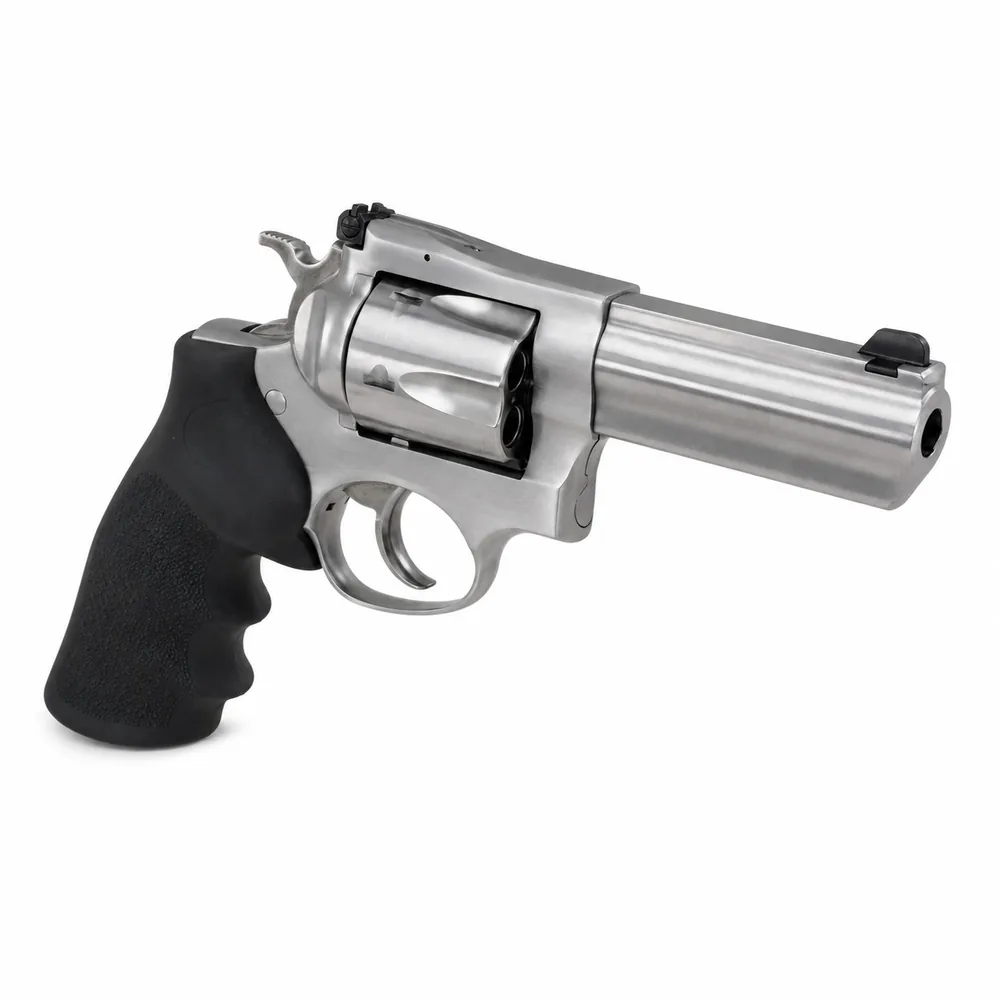
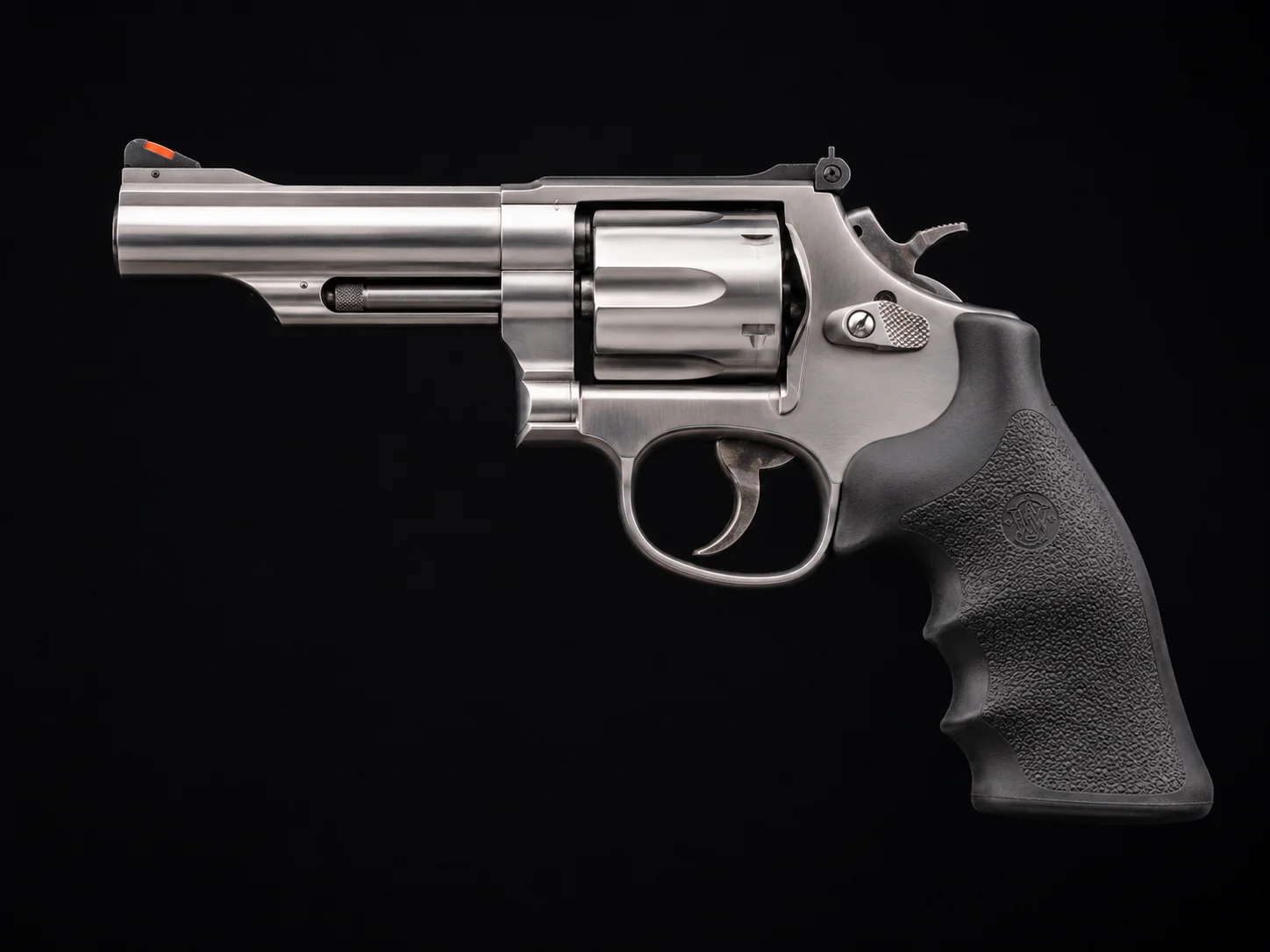
Side-by-Side Specs
| Spec | GP100 4.2" | 686 Plus 4" |
|---|---|---|
| Caliber | .357 Mag / .38 Spl +P | .357 Mag / .38 Spl +P |
| Capacity | 6 | 7 |
| Barrel | 4.2" | 4.0" |
| Weight | ≈40 oz | ≈38.6 oz |
| Action | DA/SA, exposed hammer | DA/SA, exposed hammer |
| Frame | Stainless, triple-locking cylinder | Stainless L-frame |
| Sights | Adjustable rear, fiber-optic front (current) | Adjustable rear, red-ramp front |
| Street price | ~$750–800 | ~$850 |
Two stainless, adjustable-sighted, magnum-for-life service revolvers. The 7th round and the action polish are what the extra ~$100 buys.
Size & Carry
Neither pretends to be a carry gun and neither should — at 38–40 ounces, these are house guns, trail guns, and range companions that carry only with a serious belt and intent. In the home-defense role their heft is the feature: mass is what turns .357 Magnum from punishing to merely stout. The Smith is fractionally lighter and trimmer; the Ruger's extra grip-frame steel gives holster makers a marginally easier job. Both sit ready in a quick-access safe without complaint, and the exposed hammers give both a deliberate single-action option for precise shots.
Shootability & Recoil
With .38 Specials, both are famously pleasant — heavy steel guns that make cheap practice ammo feel like a rimfire and build revolver fundamentals fast. With full-house .357s, both are stout-but-controllable, and the Ruger's extra couple of ounces and cushioned rubber grip give it a slight comfort edge across a long magnum session. Accuracy is a wash at defensive distances and beyond: adjustable sights, four-inch sight radii, and actions that reward a practiced press make both honest 25-yard guns. This category is a genuine tie, which is rare enough that we'll say so plainly.
Trigger & Controls
The Smith's category, by tradition and by trigger gauge. The 686's factory double-action pull is smoother and lighter than the GP100's out of the box, and its single-action break is glassy — the L-frame action is a large part of what the premium pays for. The GP100's pull is heavier and duller new, but it's also famously responsive to honest round count and inexpensive spring work, closing most of the gap for owners who shoot rather than shelve. Cylinder releases differ (S&W pushes forward, Ruger pushes in); neither is better, both become invisible with practice.
Capacity & Reload
Seven beats six, full stop — the 686 Plus's L-frame cylinder fits an extra round of .357 with zero practical size penalty, and in a defensive tool that's a free sixth of your payload. The asterisk is accessories: 7-shot speedloaders exist and work, but the 6-shot ecosystem the GP100 shares with generations of service revolvers is broader and cheaper. Either way, revolver reloads are a trained skill, not a given — budget speedloaders and practice reps into either purchase.
Price & Value
The GP100 typically saves you about $100, and what you give up for it — one round, some action polish you can partially restore yourself — is modest. What you keep is the revolver most gunsmiths point to when asked what will digest unlimited full-power magnums without a timing appointment. The 686 Plus asks its premium and pays it back in the seventh round, the nicer trigger from day one, and the strongest resale name in double-action revolvers. Value verdict: the Ruger is the better deal, the Smith is the better gun, and the margin in both directions is smaller than forum wars suggest. Put the $100 difference toward a case of .38s and either choice ends the conversation for decades.
Who Should Buy Which
GP100: The buy-once pragmatist
You want maximum revolver per dollar and a gun with a legendary appetite for full-power loads. You'll shoot it enough that the action smooths itself, and the saved $100 becomes practice ammo — the upgrade that actually matters.
686 Plus: The refinement buyer
You want the extra round, the trigger that's excellent on day one, and the L-frame's blend of strength and polish. This is a forty-year gun; the premium amortizes to pocket change, and you know it.
Frequently Asked Questions
Is the 686 Plus really a 7-shot .357 Magnum?
Yes — the "Plus" designation means a 7-round cylinder in S&W's L-frame, versus six in the standard 686 and the GP100. One extra round of .357 Magnum with no size penalty is the 686 Plus's headline advantage.
Which is more durable, the GP100 or the 686?
Both will outlive you on a steady diet of full-power magnums — that's the point of medium-frame .357s. The GP100's reputation leans harder into overbuilt: its triple-locking cylinder and massive frame have made "tank" the default descriptor for thirty-plus years. The 686's L-frame is every bit as service-proven; it just wears its strength with more polish.
Can you shoot .38 Special in the GP100 and 686 Plus?
Yes, both run .38 Special and .38 +P freely — and that's exactly how we'd suggest most range sessions go. Cheap, soft-shooting .38s build fundamentals; a cylinder or two of your .357 defensive load confirms zero and keeps recoil familiarity honest.
Are these revolvers too heavy to carry concealed?
At roughly 38–40 oz, they're committed carries — belt-holster, gun-belt, cover-garment carries — not casual ones. Most owners treat them as home-defense, field, and range guns. If you want a carry revolver, that's the LCR/642 class, which we compare separately.