S&W Equalizer vs S&W Shield EZ .380
Last updated July 18, 2026
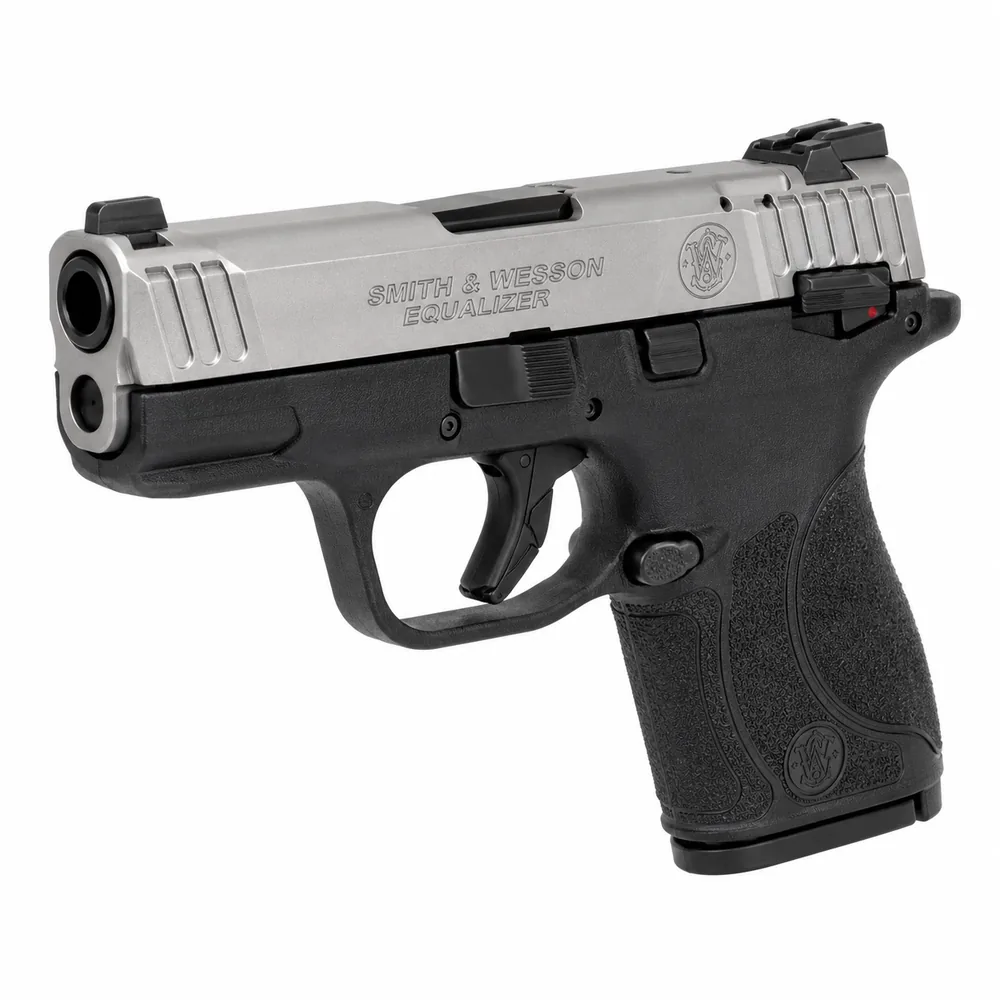
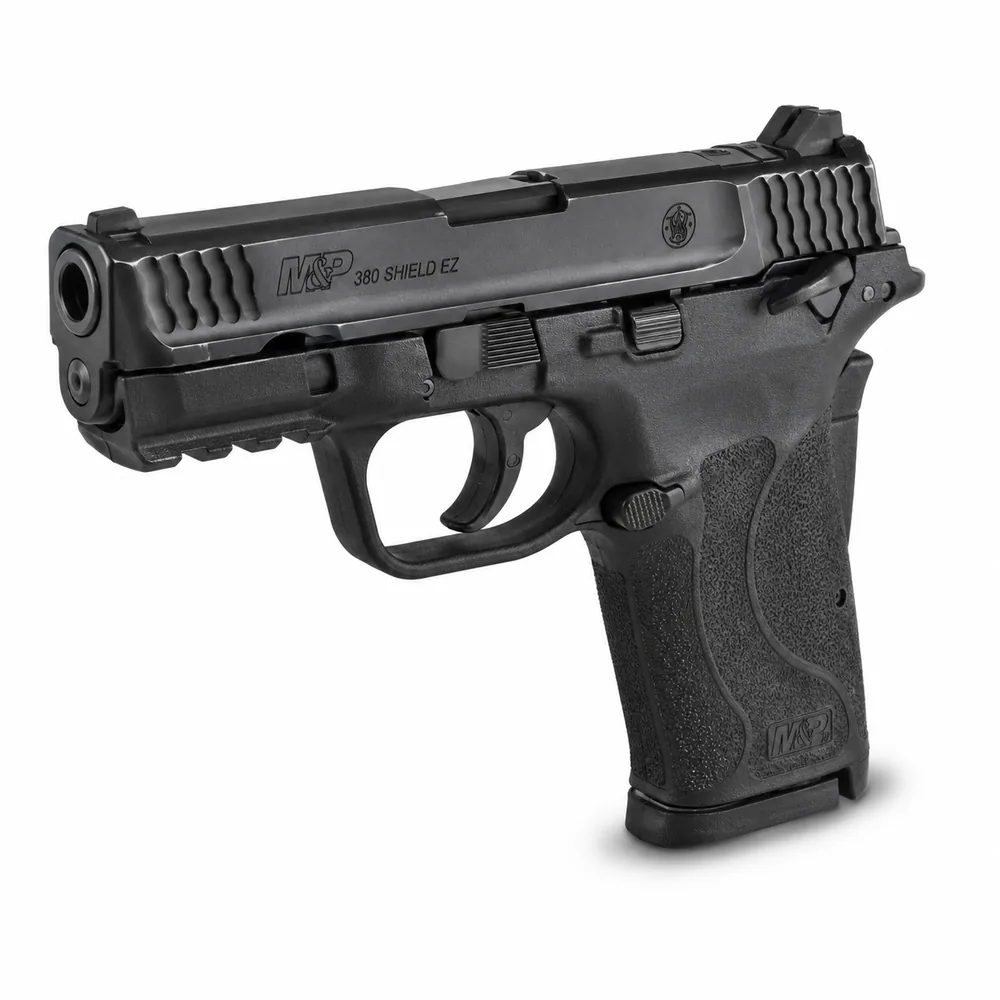
The Verdict
Equalizer for capacity and 9mm power; Shield EZ .380 for the lightest recoil and easiest manipulation.
| Spec | S&W Equalizer | S&W Shield EZ .380 |
|---|---|---|
| Caliber | 9mm | .380 ACP |
| Capacity | 10+1 / 13+1 / 15+1 | 8+1 |
| Barrel | 3.675" | 3.675" |
| Weight (empty) | 22.9 oz | 18.5 oz |
| Overall Length | 6.88" | 6.7" |
| Width | 1.23" | 1.16" |
| Slide Rack Force | Reduced (EZ-style) | Reduced (EZ-style) |
| MSRP | ~$500 | ~$430 |
Size & Carry
Nearly identical footprints — both share the Shield platform DNA. The Equalizer is marginally larger and heavier, primarily to accommodate the wider 9mm magazine. Both conceal easily for compact-class guns. The Shield EZ .380's slightly lighter weight (18.5 vs 22.9 oz) is noticeable over a full day.
Both feature Smith & Wesson's easy-rack slide design with a lightened recoil spring and textured slide serrations. If slide manipulation difficulty is why you're considering either gun, both solve that problem equally well.
Shootability & Recoil
This is the core decision point. The Shield EZ .380 is the softer-shooting gun — .380 ACP produces significantly less recoil than 9mm, even accounting for the EZ's lighter weight. For shooters with hand strength limitations, arthritis, or injury recovery, the .380 is the more comfortable choice.
The Equalizer mitigates 9mm recoil with its lightened recoil spring and slightly heavier frame. S&W specifically tuned the Equalizer's recoil impulse to feel softer than comparable compact 9mms. The result is a 9mm that's noticeably easier to shoot than a standard Shield or M&P, but still delivers more snap than the .380 EZ.
Trigger & Controls
Both feature grip safeties — a polarizing design choice. Some shooters dislike the additional control; others appreciate the passive safety layer. Both triggers are decent: reliable, predictable, and adequate for defensive use without being remarkable.
Both have ambidextrous manual thumb safeties. Both have easy-to-load magazines with side-button assist. The user experience is intentionally similar — S&W designed the Equalizer to feel like a natural step up from the Shield EZ.
Capacity & Reload
The Equalizer's capacity is a dramatic advantage: it ships with three magazines (10, 13, and 15 rounds) versus the Shield EZ .380's single-stack 8+1. That's nearly double the ammunition with the 15-round magazine. For anyone who can manage 9mm recoil, this capacity gap is a compelling reason to step up.
The Shield EZ .380's lower capacity is a function of its single-stack design, which contributes to the narrower width and easier grip. It's a trade-off, not a flaw.
Price & Value
The Equalizer runs about $70 more than the Shield EZ .380 — and includes three magazines instead of one. On a cost-per-round-of-capacity basis, the Equalizer is the clear winner. The Shield EZ .380's value is in what it does that no 9mm can: deliver minimal recoil in a simple, easy-to-use package.
If you can handle 9mm recoil, the Equalizer is the better gun. If 9mm recoil genuinely limits your ability to shoot accurately and confidently, the Shield EZ .380 isn't a compromise — it's the right tool.
Who Should Buy Which
Buy the Equalizer if
you can manage 9mm recoil comfortably, want significantly more capacity, or are stepping up from a .380 and want the easy-rack experience in a more capable caliber.
Buy the Shield EZ .380 if
minimum recoil is essential — due to hand strength, arthritis, or personal preference — and you want the most user-friendly defensive handgun on the market. Shot placement with .380 you can control beats 9mm you can't.