If you buy one gun and never read another word:
Glock 19 Gen 5 (~$730). It does everything well — home defense, concealed carry, range training — and has the largest aftermarket and holster ecosystem in the world. It's the Honda Civic of handguns: boring, reliable, and exactly what you need.
On a tighter budget? The Taurus G3c (~$240) or Hi-Point C9 (~$190) get the job done without compromising on reliability.
Before You Buy Anything
If you've never owned a handgun before, the worst thing you can do is buy one online based on a list. The best thing you can do is rent three or four guns at a range and put 50 rounds through each one. The gun that fits your hand, that you shoot accurately, and that you actually enjoy shooting is the right gun — regardless of what any article (including this one) tells you.
That said, certain handguns consistently rise to the top for beginners because they share a few critical traits: they're chambered in 9mm (affordable to practice with, manageable recoil, and modern defensive loads perform on par with larger calibers), they're mechanically simple (no manual safeties to forget under stress, no complicated decockers), and they have large aftermarkets (holsters, sights, lights, and parts are easy to find).
Why 9mm? The FBI, most U.S. law enforcement agencies, and the U.S. military have standardized on 9mm. Modern hollow-point ammunition like Federal HST and Speer Gold Dot has closed the performance gap with .40 S&W and .45 ACP. Meanwhile, 9mm costs roughly $0.18–0.28 per round versus $0.35–0.50 for .45 ACP — which means you'll actually practice with it. More practice beats bigger bullet, every time.
What to Look for in a First Defensive Handgun
Reliability above all else. A defensive handgun must fire every time you pull the trigger. Period. That means established manufacturers with proven track records — Glock, Smith & Wesson, SIG Sauer, Ruger, CZ, and Walther all make handguns that have been torture-tested through tens of thousands of rounds.
Ergonomics matter more than specs. A gun with a great spec sheet that doesn't fit your hand is useless. Grip angle, grip circumference, trigger reach, and slide manipulation effort all vary significantly between models. This is why renting before buying is non-negotiable.
Optics-ready is the new standard. In 2026, a factory-milled optics cut on the slide is no longer a luxury feature — it's expected. A red dot sight makes target acquisition faster and easier, especially for new shooters. Even if you don't mount one immediately, buy a gun that can accept one later.
Our Picks
Glock 19 Gen 5 MOS
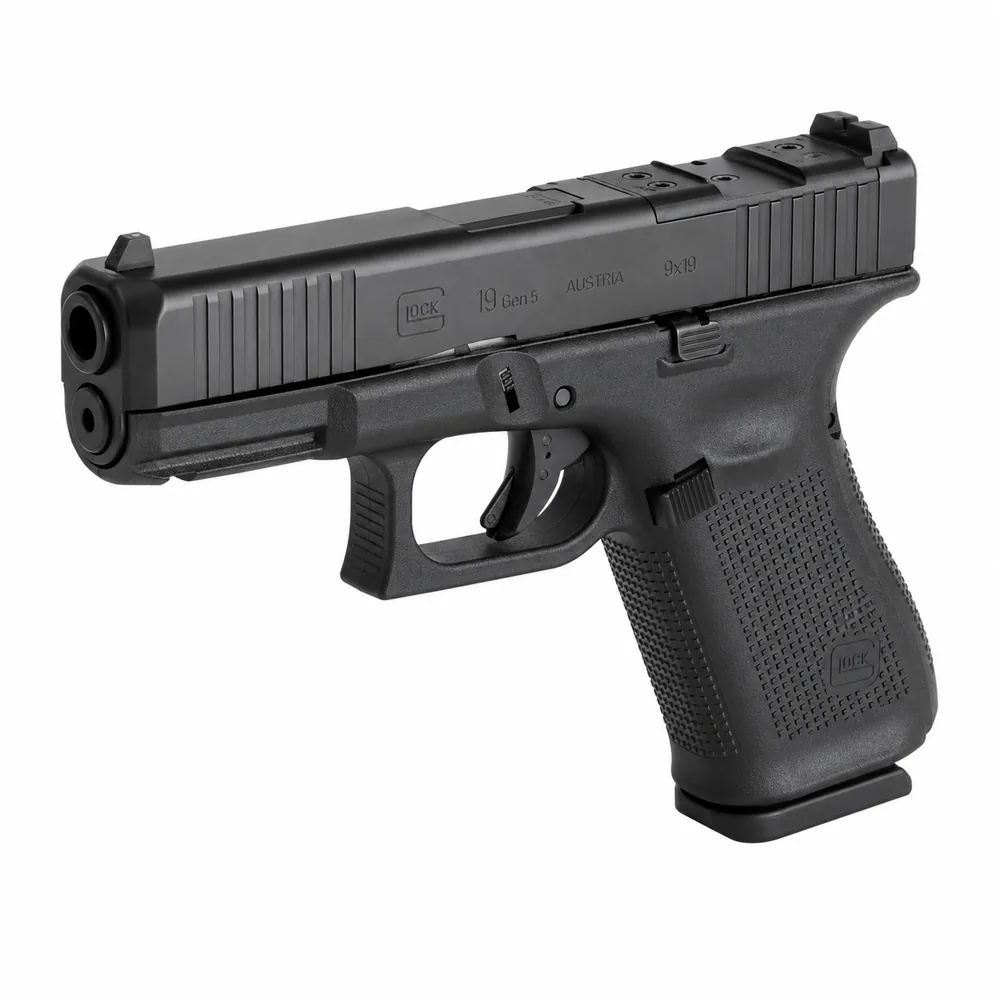
There's a reason this gun appears on every beginner list ever written: it works. The Gen 5 removed the finger grooves of earlier generations (fitting more hand sizes), added an ambidextrous slide stop, a flared mag well, and the Glock Marksman Barrel for improved accuracy. The MOS variant comes optics-ready from the factory. It's large enough to shoot comfortably at the range, compact enough to conceal with a proper holster, and has the deepest aftermarket of any handgun on earth. Glock released Gen 6 in January 2026, but the Gen 5 is proven through millions of rounds and is currently available at lower prices — making it the smarter buy for a first gun.
- Legendary reliability — runs in any condition
- Largest aftermarket in firearms (holsters, sights, parts, lights)
- Optics-ready (MOS model)
- Compact enough for concealed carry, large enough for home defense
- Resale value holds exceptionally well
- Grip angle doesn't suit everyone — try before buying
- Stock sights are mediocre (plan to upgrade)
- No manual safety (which is a pro for most defensive uses, but some beginners prefer one)
Smith & Wesson M&P9 M2.0 Compact
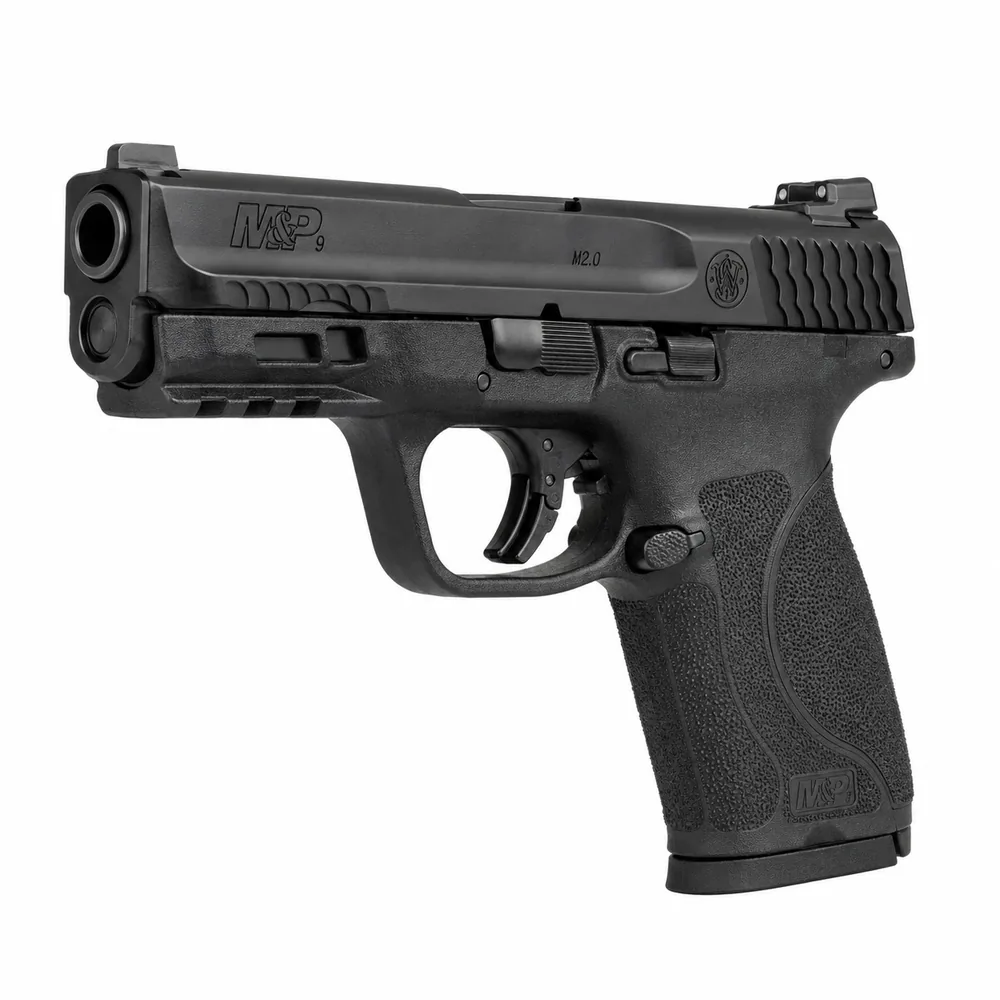
The M&P9 M2.0 is the gun that might actually feel better in your hand than the Glock — many shooters say exactly that. The aggressive grip texture and four interchangeable palm swell inserts let you customize the fit. The trigger on the M2.0 is a meaningful improvement over the original M&P: lighter, crisper, with an audible and tactile reset that helps beginners learn follow-up shots. Optics-ready versions are widely available. S&W has been making firearms since 1852, and the M&P line has been adopted by hundreds of law enforcement agencies across the U.S.
- Superior grip ergonomics — most shootable compact out of the box
- Four interchangeable palm swell inserts for hand size customization
- Improved M2.0 trigger with crisp reset
- Thinner grip than Glock 19 — better for smaller hands
- Proven law enforcement track record
- Aftermarket not as deep as Glock (but growing)
- Trigger still not as refined as Walther PDP or CZ P-10
- Stock sights are adequate but not great
SIG Sauer P365
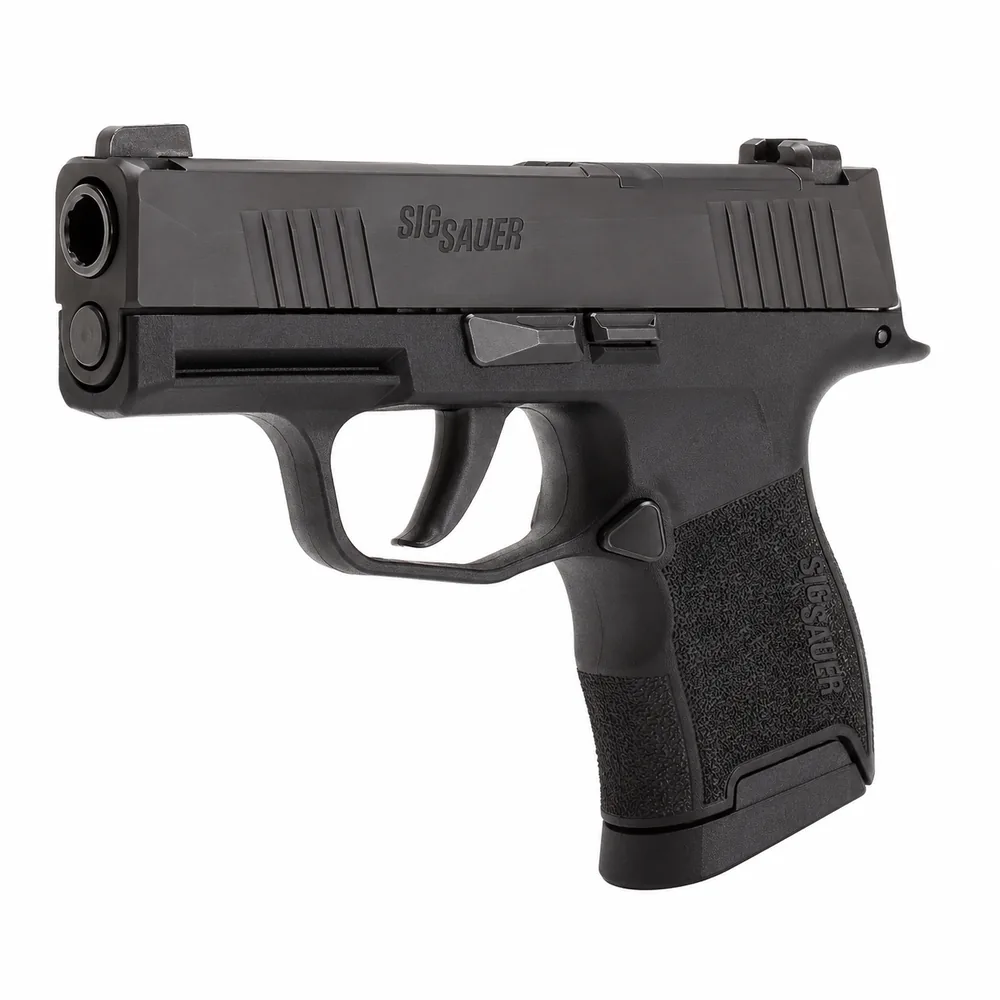
If your primary plan is to carry a gun every day concealed — not keep it in a nightstand — the P365 is the pick. SIG created the micro-compact category in 2018 by fitting 10+1 rounds of 9mm into a package barely wider than an inch. The P365 family has expanded to include the X, XL, X-Macro, and Macro Comp variants, but the base P365 remains the best starting point. It's the gun that disappears in an IWB holster under a t-shirt. The trade-off: it's snappier to shoot than a compact like the Glock 19 because it weighs less. You'll need good grip technique.
- Class-defining size-to-capacity ratio
- Excellent factory trigger for a micro-compact
- Massive variant ecosystem (XL, X-Macro, Comp)
- XRAY3 night sights included
- 10+1 standard, 12+1 and 15+1 mags available
- Snappier recoil than larger compacts — requires good grip fundamentals
- Smaller frame is harder for large hands
- PVD coating wears faster than competitors
- Not ideal as a primary home defense gun (too small)
Walther PDP Compact
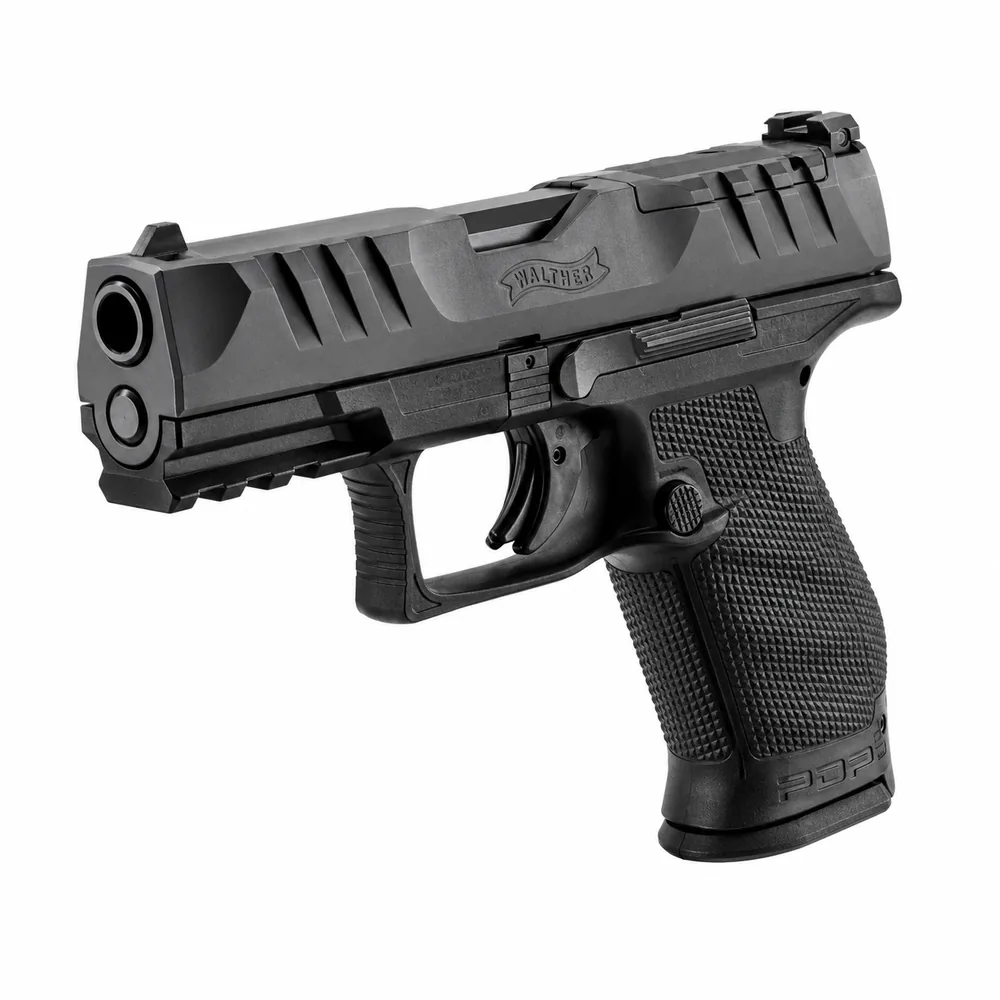
Walther quietly builds some of the best-shooting polymer pistols on the market, and the PDP's Performance Duty Trigger is the one every other striker-fired gun is chasing. It breaks cleanly with a hyper-short reset that makes fast, accurate follow-up shots noticeably easier — even for beginners. The SuperTerrain slide serrations are the most aggressive in the class, making the slide easy to rack even with sweaty hands. Walther offers the PDP in multiple barrel lengths and grip sizes. For a first gun, the 4-inch compact model is the sweet spot.
- Best factory striker-fired trigger in the class — bar none
- SuperTerrain slide serrations for easy manipulation
- Excellent out-of-the-box accuracy
- Multiple barrel/grip size options within the PDP family
- Optics-ready with multiple mounting plates
- Slightly wider than Glock 19 — may matter for concealment
- Aftermarket is smaller than Glock/S&W (improving)
- Grip can feel wide for small hands
Taurus G3c
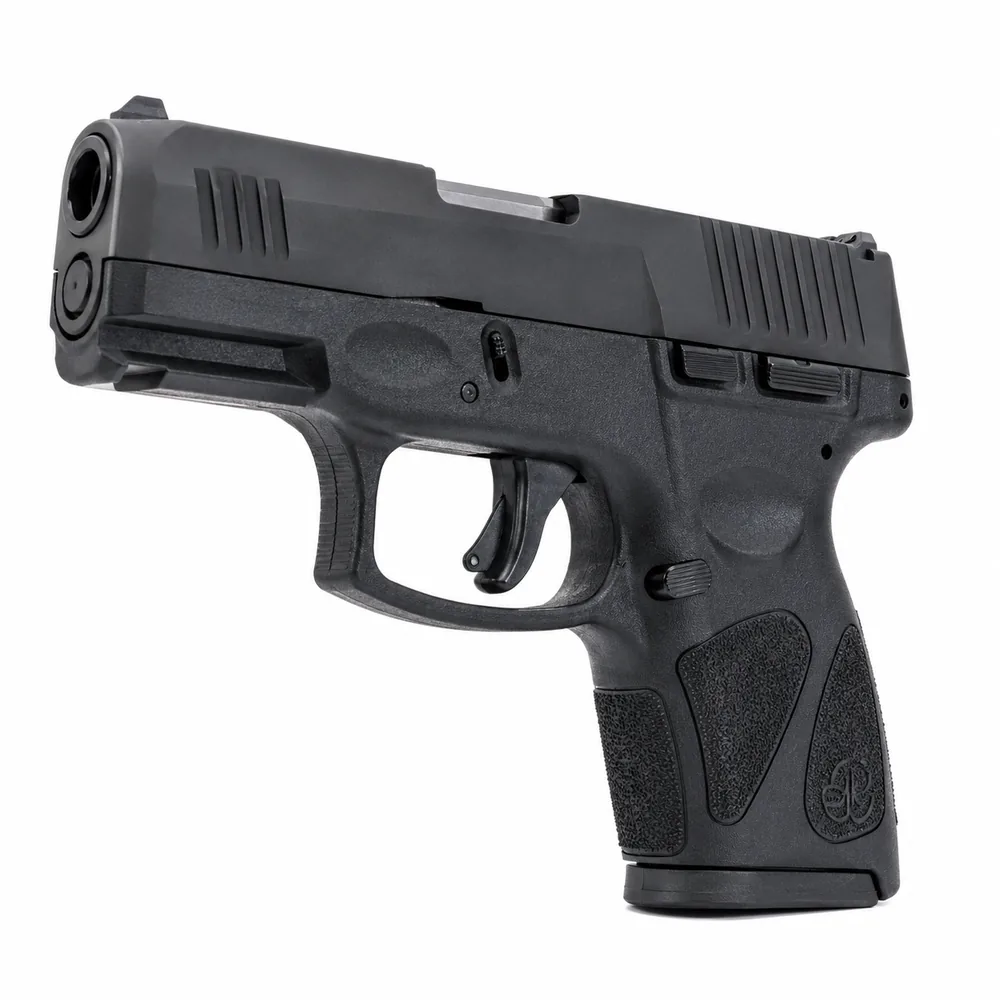
The G3c is the most gun you can get for $250 in 2026. Full stop. It's reliable (Taurus has dramatically improved quality control in recent years), accurate enough for defensive use, and sized right for concealed carry. It accepts Glock sights and SIG P226 magazines, which extends its versatility. The flat-face trigger is decent for the price point. This is the gun that proves our philosophy: a reliable $250 gun you train with beats a $700 gun in layaway. Will it match the Glock 19's trigger, aftermarket, or resale value? No. Will it fire every time you need it to? Yes.
- Extremely affordable — leaves budget for ammo, holster, and training
- Reliable out of the box with defensive ammo
- Accepts Glock-compatible sights
- 12+1 capacity in a compact frame
- Manual safety option (good for some beginners)
- Trigger is adequate, not great
- Magazine witness holes are poorly placed
- Aftermarket is limited compared to big names
- Resale value is low
- Some shooters report break-in period of ~200 rounds
What to Buy With Your First Gun
The handgun is only part of the equation. Budget for these from day one:
A quality holster — Kydex, full trigger guard coverage, from a reputable maker. Minimum $40–60. Leather and nylon universal holsters are not acceptable for defensive carry.
500 rounds of practice ammo — Federal American Eagle or Blazer Brass 115gr FMJ. ~$0.20/round. Budget approximately $100.
2 boxes of defensive ammo — Federal HST 124gr or Speer Gold Dot 124gr. ~$1/round. Run at least 50 rounds through your gun to confirm reliable feeding.
A structured beginner pistol course — Not YouTube. An in-person course with a qualified instructor. Expect $100–250. This is the single most important investment you can make.
Eye and ear protection — Electronic ear pro is strongly recommended (~$50–80). It lets you hear range commands while protecting your hearing.
A Note on Training
We cannot stress this enough: buying a gun without training is not defense — it's a liability. A handgun you haven't learned to operate safely under stress is a danger to you, your family, and bystanders. Before you carry, invest in a minimum of 50 hours of structured training. Before you're confident, invest 150+. This isn't optional. It's the cost of responsible ownership.
See our training recommendations for specific hour benchmarks and what each tier of proficiency looks like in practice.